When I think of Chaoshan now, two fans come to mind first. One is white paper on a wooden handle, with “Shantou” written in ink; the other opens in a vivid red, bearing the name “Chaozhou”. Both are light. Yet remembering them brings back the moments when I was reluctant to move on: standing beneath an old shop sign, following an island road until the sea opened before me, lifting a fold of rice noodle roll with my chopsticks in Chaozhou. From Shantou to Nan’ao and on to Chaozhou, I carried those small moments farther than I knew.后来想起潮汕,先浮上心头的,是两把扇子。一把白纸木柄,墨色写着“汕頭”;一把红得热闹,展开是“潮州”。两把扇子都很轻,记起它们,沿途那些舍不得走的片刻便又回来了:在旧招牌下仰一仰头,沿岛上的路转过一道弯,迎面撞见满眼的海,再到潮州,用筷尖挑起一折肠粉。从汕头到南澳,再到潮州,原来一路带走了这么多。
Shantou: under the old signs汕头:旧招牌下
Shantou’s old streets reward a slow walk with your head tilted back. Arcade follows arcade, joining the shade beneath their eaves into a long passage. Wooden windows deepen or brighten along the façades; balconies venture half a step towards the street. The signs venture farther still. Round and square, upright and crosswise, they crowd the air above the pavements. Groceries, silk, electrical goods: familiar words acquire a certain gravity over these doorways. There is only a narrow strip left for the sky, and the clouds pass behind a tangle of wires.汕头的老街,宜仰着头慢慢走。骑楼一幢挨着一幢,把檐下的阴凉连成一条长路。木窗有深有浅,阳台向街面探出半步;招牌更不肯退让,横的竖的,圆的方的,在半空中挤挤挨挨。南北果品、绸缎、电器,许多字看着眼熟,落在这样的门楣上,却生出另一番郑重。天空被挤得只剩一线,云从电线后面慢慢过去。
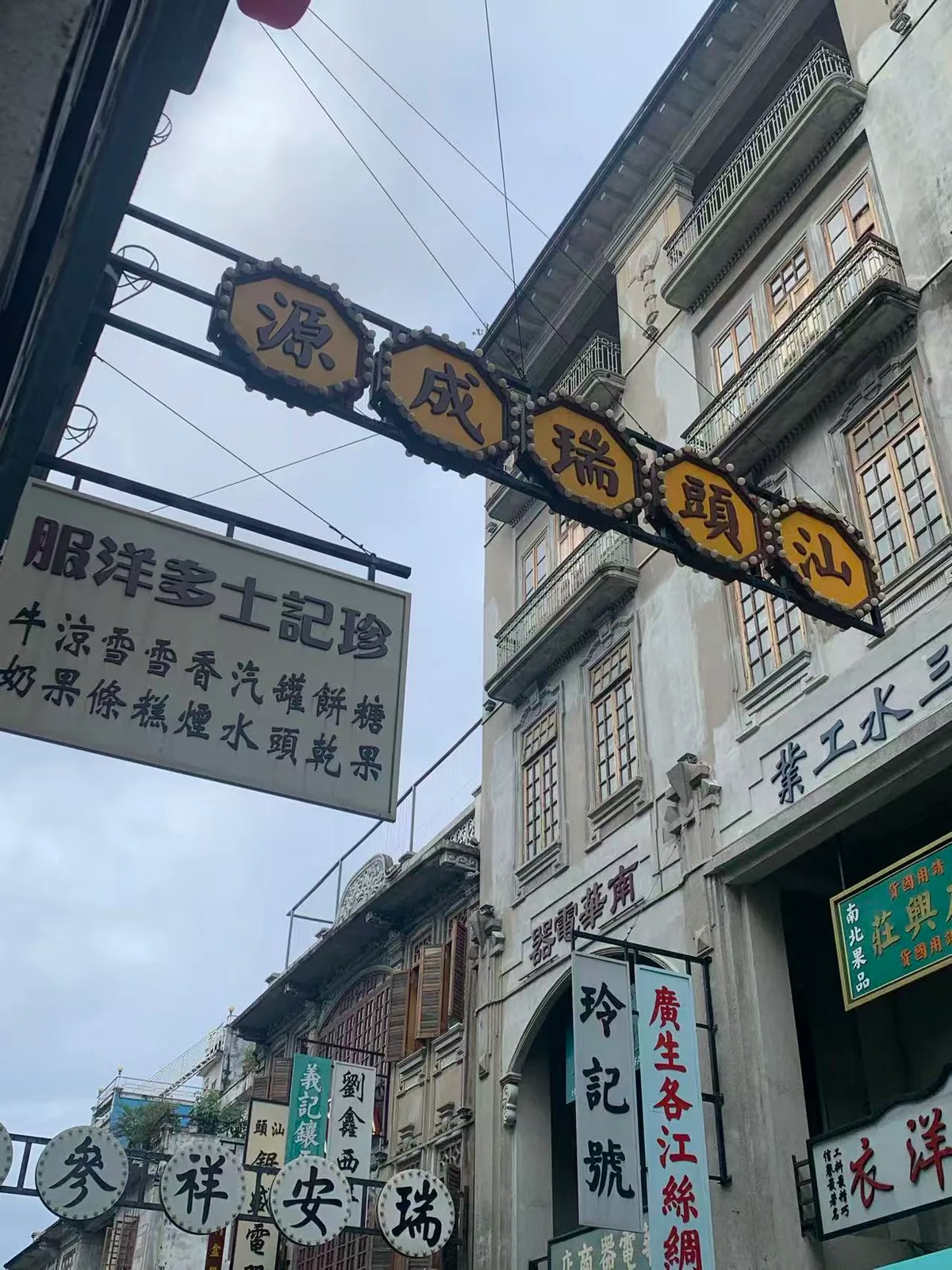
“Rui”, “Xiang”, “An”: auspiciousness, good fortune, peace. Those few characters are enough to keep me looking. Prosperity for the shop, safety for the family—such wishes hang openly above the street, weathering the wind and welcoming whoever comes along. The walls have aged around them; the wishes remain fresh. I pass beneath them with my backpack and feel a little less of a stranger.“瑞”“祥”“安”,单是这些字,就够读一会儿。生意的兴隆,家人的平安,原来可以这样端端正正地挂在门外,日日受风,也日日迎人。街道的年岁藏在墙面里,人的心愿倒一直新鲜。我背着包从下面走过,忽然觉得,自己离这座陌生的城市近了些。
Nan’ao: wide water, low clouds南澳:海阔,云低
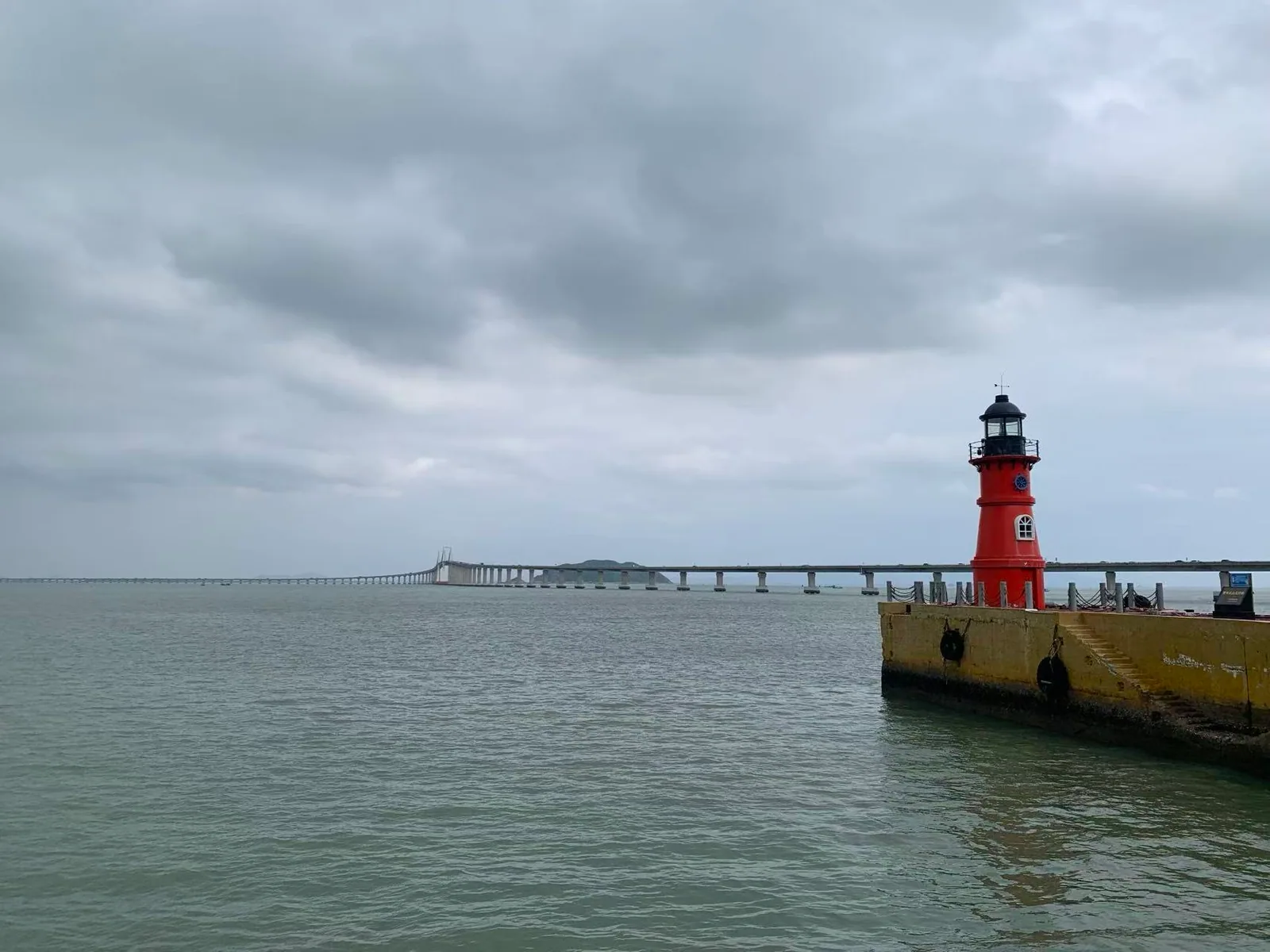
On Nan’ao, the space around me changes. The sea is grey-blue beneath low clouds, and the bridge runs across it until its piers diminish into the distance. A red lighthouse stands by the quay, startlingly clear against all that muted colour. I stop beside it. Water darkens the foot of the old wall; a tyre hangs from a chain, waiting between stone and sea. Across the water, the bridge makes a fine, long line. The crowded streets of Shantou are behind me now. Here I can look for a long time without reaching the end of anything.到了南澳,天地一下子宽起来。云压得低,海是灰蓝色的,大桥横过去,桥墩一节比一节小,直到远处渐渐分不清。红灯塔立在码头边,四下颜色都淡,唯独它红得鲜明。我在旁边停下,看水痕浸着旧墙,黑轮胎悬在铁链上,看那座桥怎样细细长长地伸向来处。汕头挤挤挨挨的街巷已经留在身后。眼前这一片,却怎么也望不尽。
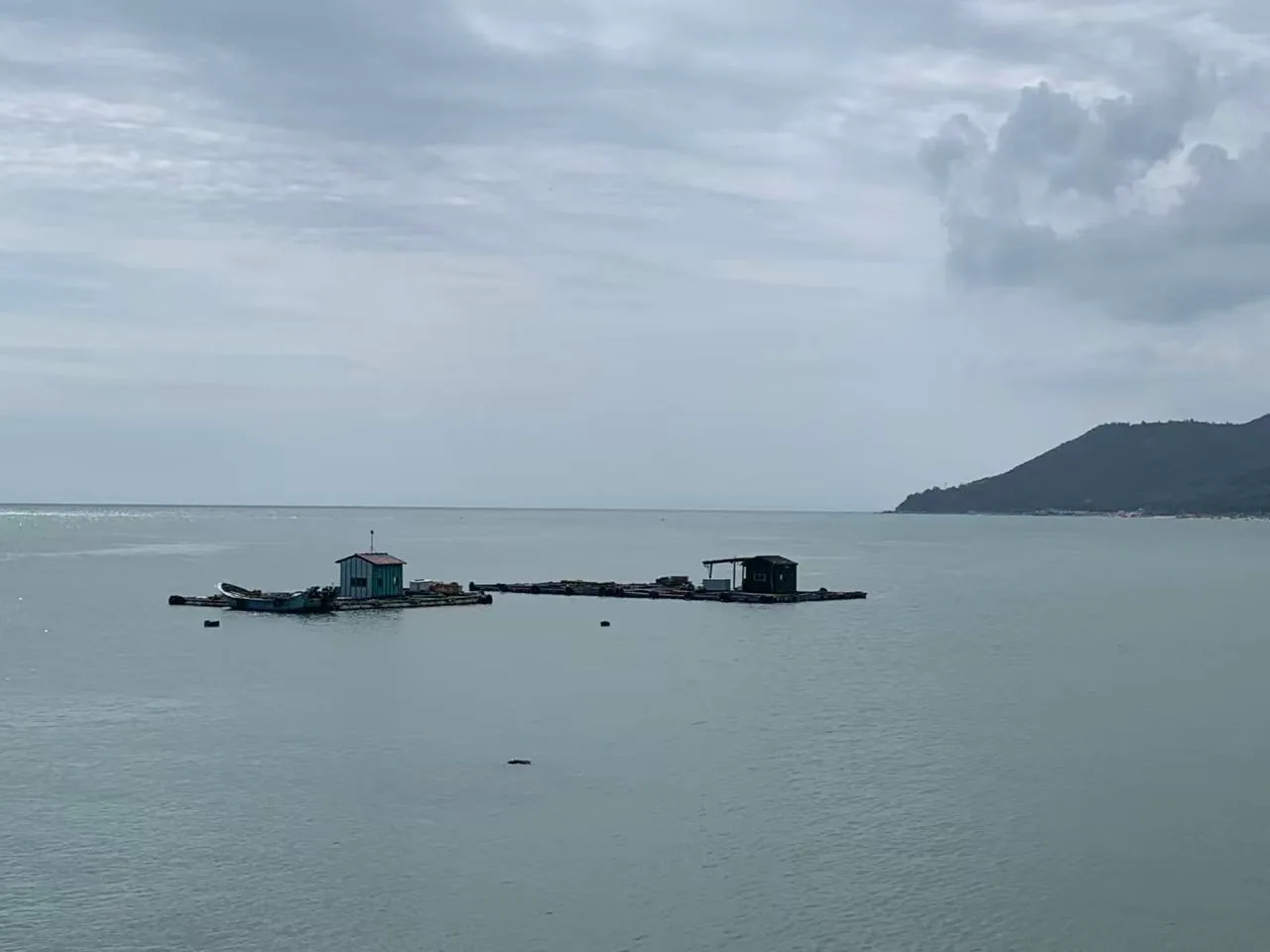
Farther out, two small huts rest on floating platforms. A boat lies close to one of them, and a headland slopes into the water. No brilliant blue announces itself here. The sea holds the colour of the clouds, with only small ripples moving through it. Those huts must have doors, windows, things kept inside; someone has made a place for daily life in all this breadth of water. I find myself wondering what it would be like to open one of those doors and see the sea first, every morning.再望过去,两间小屋歇在浮排上,小船紧挨着其中一间,山岬从远处缓缓落进水里。这一带的海没有耀眼的蓝,云是什么颜色,水也接近什么颜色,只有细纹一层层漾开。小屋里想必有门窗,有收好的用具,有一个人安顿日常的地方。在这样阔的水面上,竟也能留住几尺家常。我望着它们出神,想着推开那扇门,日日先见到海,会是什么滋味。
Taking the road beside the sea且向海边去
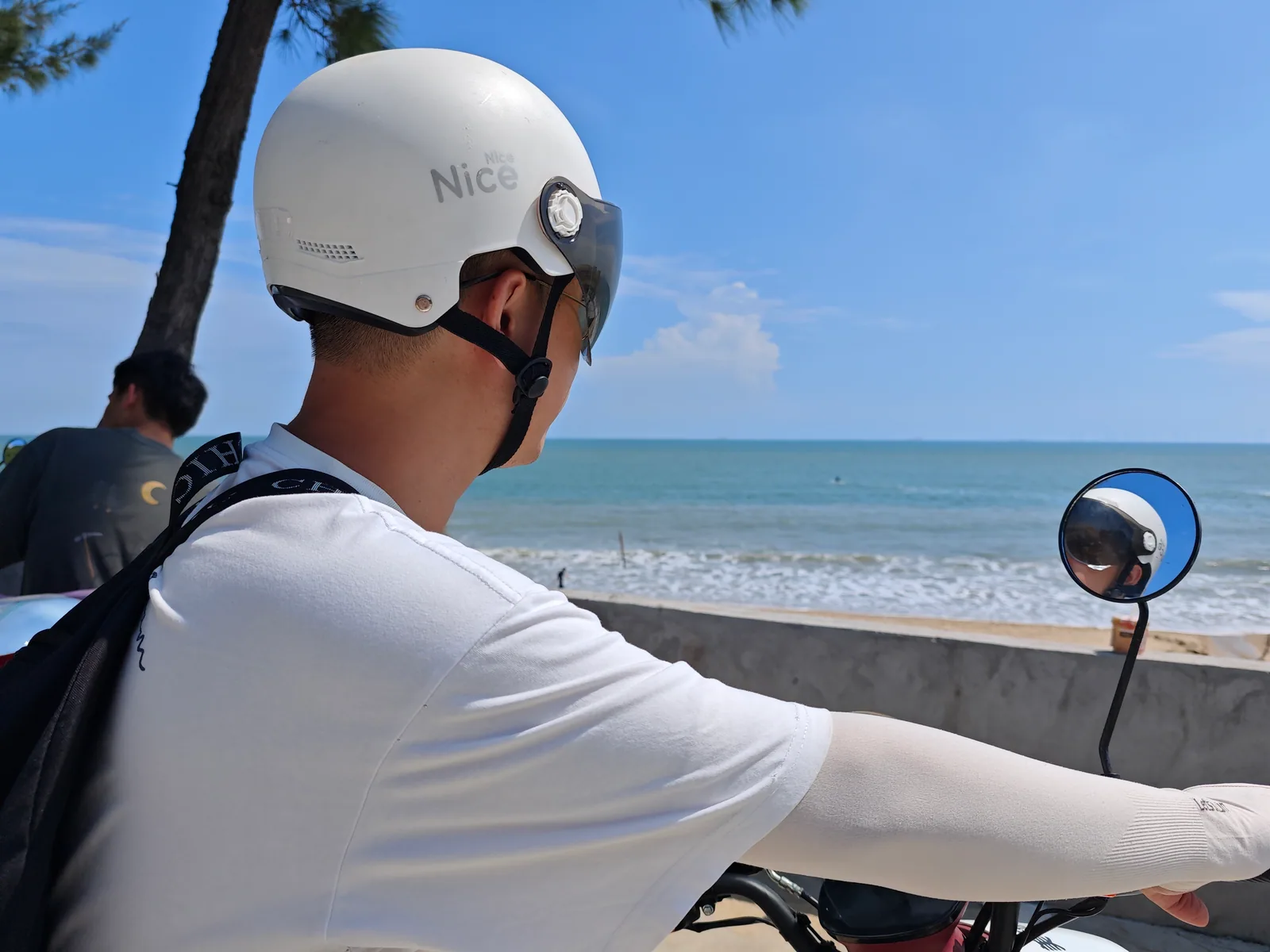
With a helmet on, the coastal road is a pleasure to follow. The sea keeps pace just beyond the low wall. Trees interrupt it for a moment, then blue opens again between the branches. In the round mirror, a white helmet and a fragment of sky travel along together. I begin to care less about how far remains. There is the curve ahead, the light on the water, the next patch of shade. A road like this makes small distances worth taking slowly.戴好头盔,沿着海边的路往前去,海就在矮墙外陪着。树影偶尔遮一遮,转眼,蓝色又从枝叶间铺开。圆圆的后视镜里,白头盔与一小片天空跟着同行。起初还惦记前面有多远,后来只顾看弯道外的水光,看下一段树荫落在哪里。这样一条路,短短一程,也值得慢慢走。
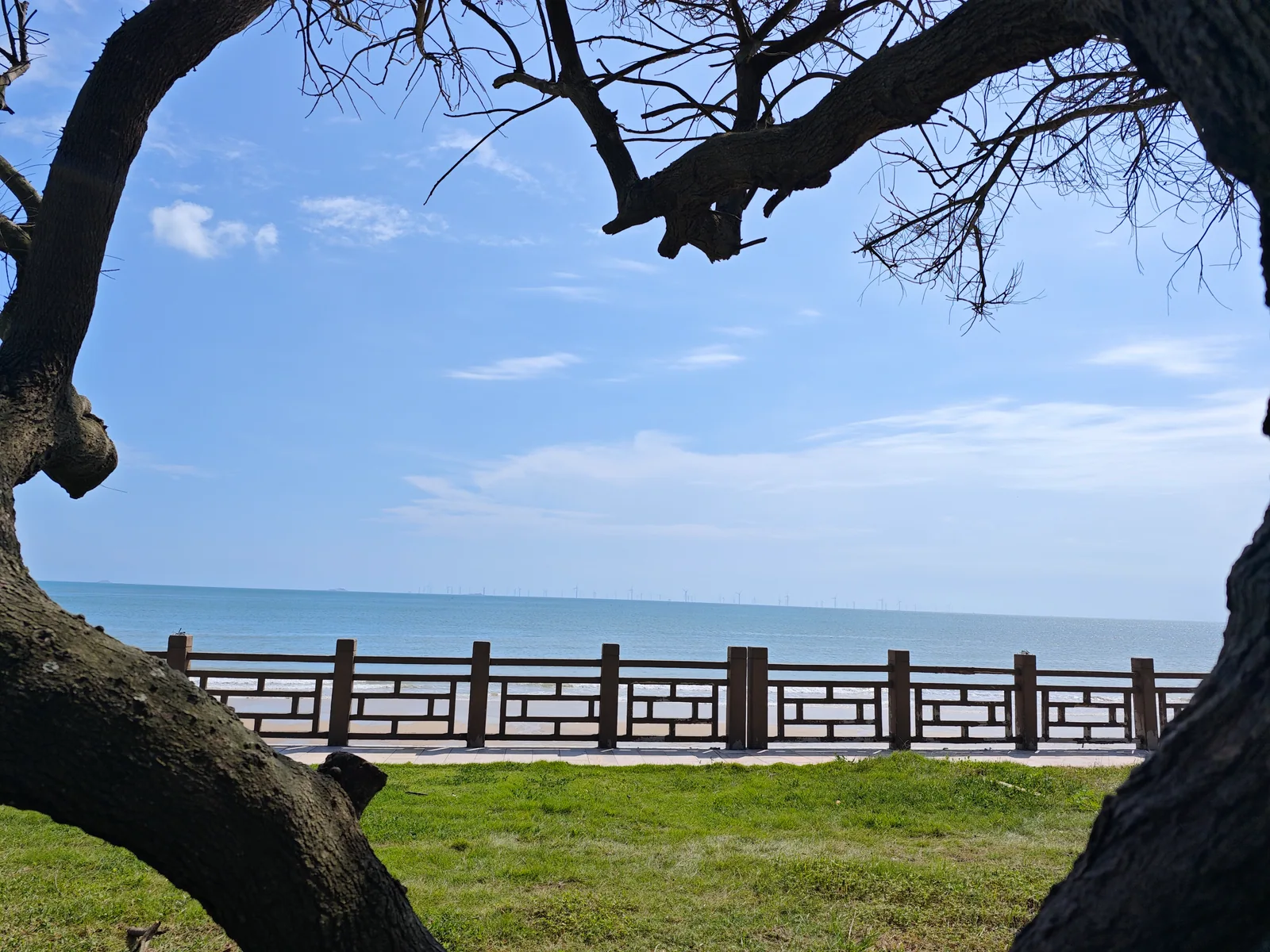
Under the trees, the coast feels different again. Dark branches reach across the blue, leaving an uneven opening between them; through it are grass, a railing and the sea. Far offshore, the wind turbines are as pale as pencil marks. I stand in the shade for a while. Beyond it the water is bright, but there is no need to move nearer. From this small patch of cool ground, the view is already enough.到了树下,海又换了个看法。深色枝干横斜着,在蓝天前围出一道不规则的空隙,空隙里有草地、栏杆,再往外才是水。远处海上的风机淡得像几笔铅痕。我在阴影里站一会儿,外面的水光很亮,却不必急着走近。脚下这一小片清凉,已经够把眼前的海看得很好。
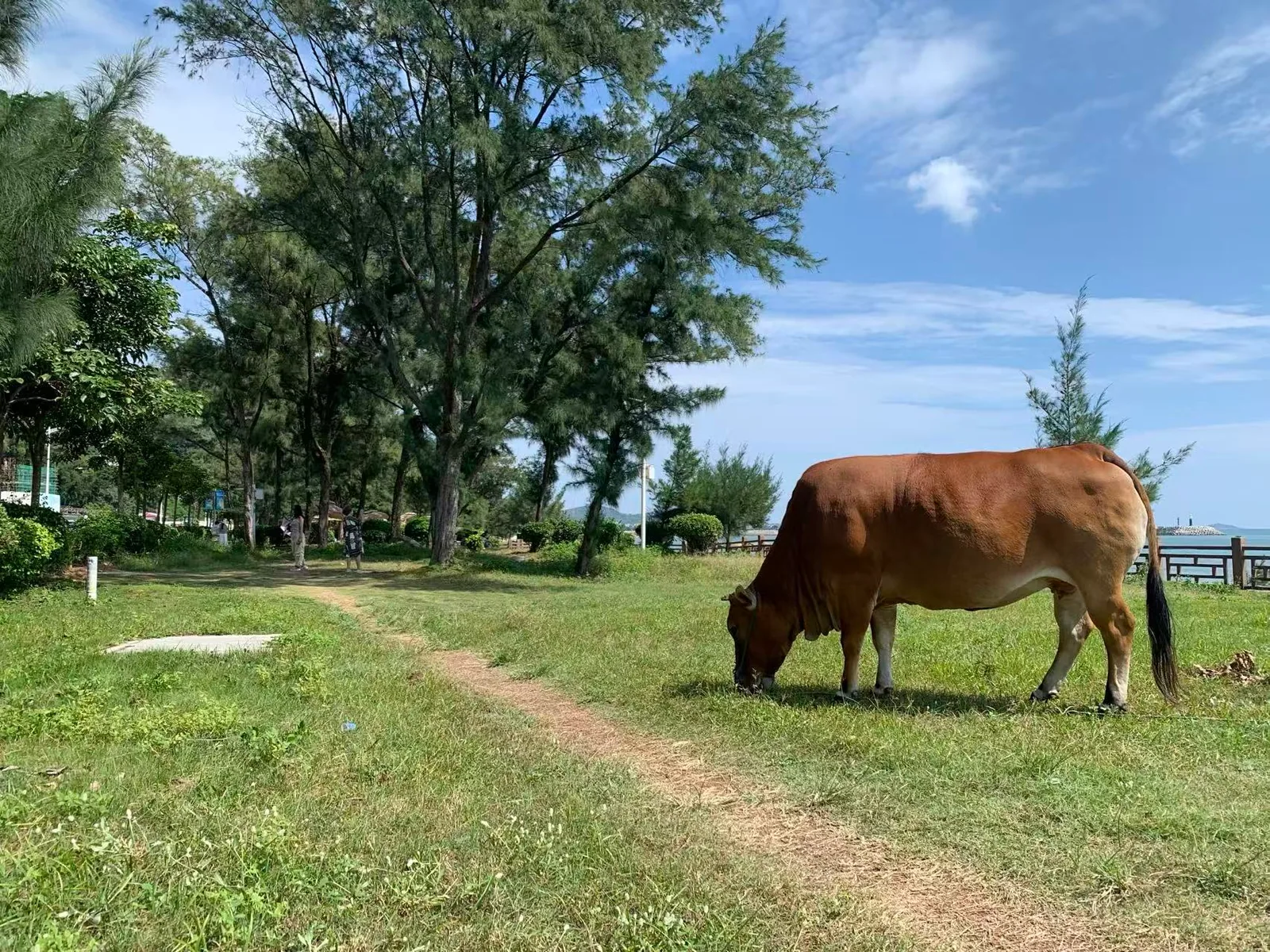
A brown cow is grazing nearby. Sunlight rests on its broad back; the grass hides its lowered muzzle. A narrow path curves past its side and into the trees. The cow pays no attention to the expanse of water behind it. Blade by blade, it gets on with its afternoon. I had come a long way to look at the sea, and here I am, lingering over a cow. The thought makes me smile. For a moment, there is no reason to be anywhere else.旁边竟有一头黄牛。宽宽的脊背晒着太阳,头埋在草里,嘴边一小片绿正慢慢短下去。小径从它身侧绕过,钻进树荫,它却连头也不抬。身后这么大一片海,似乎都不及眼前这口青草要紧。我远远跑来看海,到头来,倒为一头吃草的牛停了许久。想到这里,自己先笑了。那一刻,哪里也不必赶去。
A harbour for boats, a sky for birds船有归处,鸟有长空
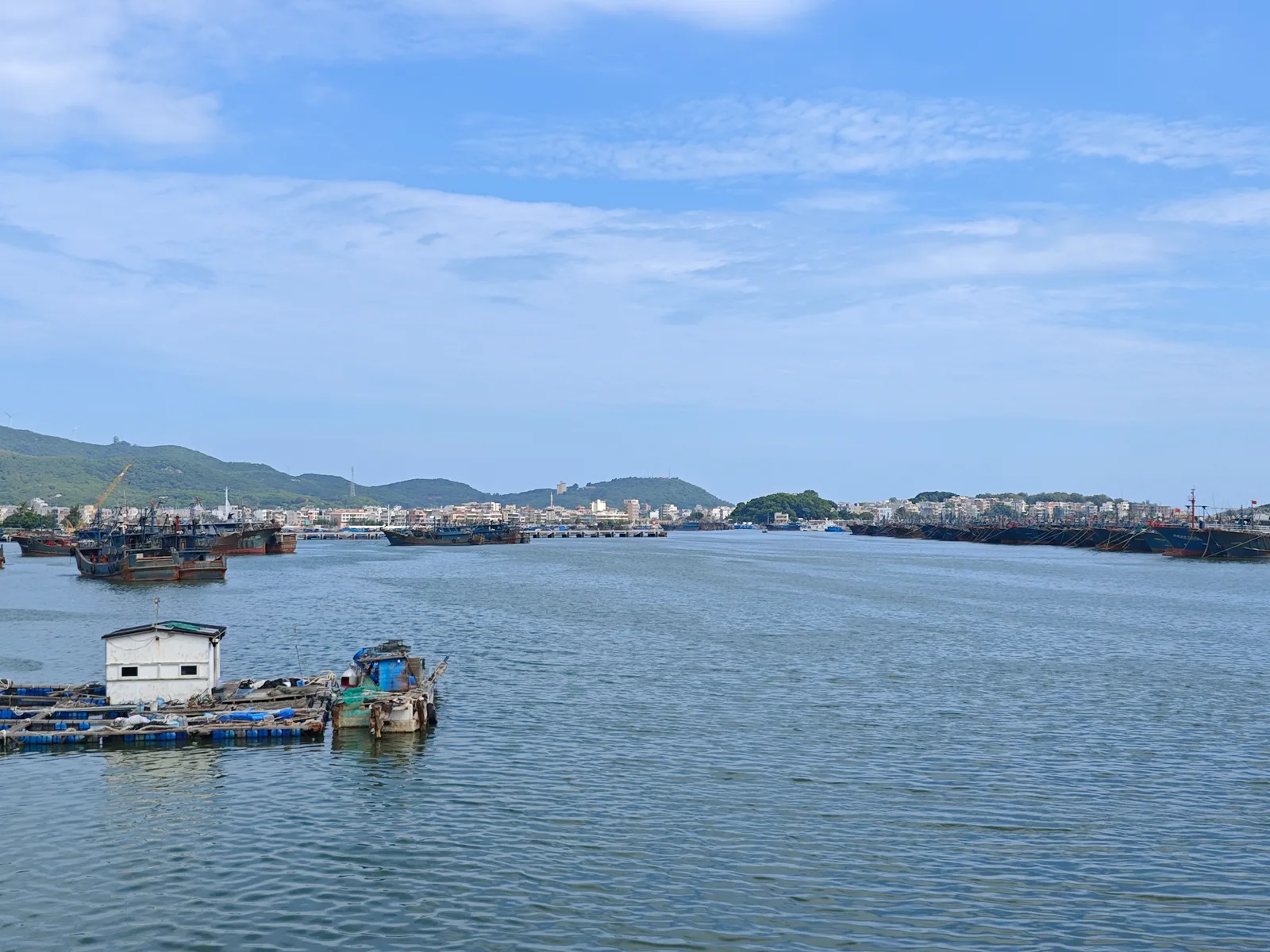
The fishing harbour brings me back among the affairs of people. Hulls gather along the water, and masts rise close together. There is rust on the boats, rope on the decks, a small white hut among the working clutter of the nearest platform. Across the harbour, houses lie at the foot of green hills. Looking at the moored boats, I think of departures made for a living, and of how different a coastline must look when it is the place you are coming home to. I have the leisure to call this scenery. For someone else, this sheltered water is where the day’s work ends.渔港把人重新带回日常。船身一只挨着一只,桅杆密密竖起,甲板上有缆绳,旧漆里透着锈色,近处浮排的小白屋周围,散放着谋生用的东西。对岸人家倚着青山,沿水住下来。望着这些泊住的船,会想到有人为生计从这里出海,再沿着同一段岸线回来。我有闲心把它叫作风景,另一些人望见这片港湾,想到的或许是一天的活计终于做完,可以回家了。
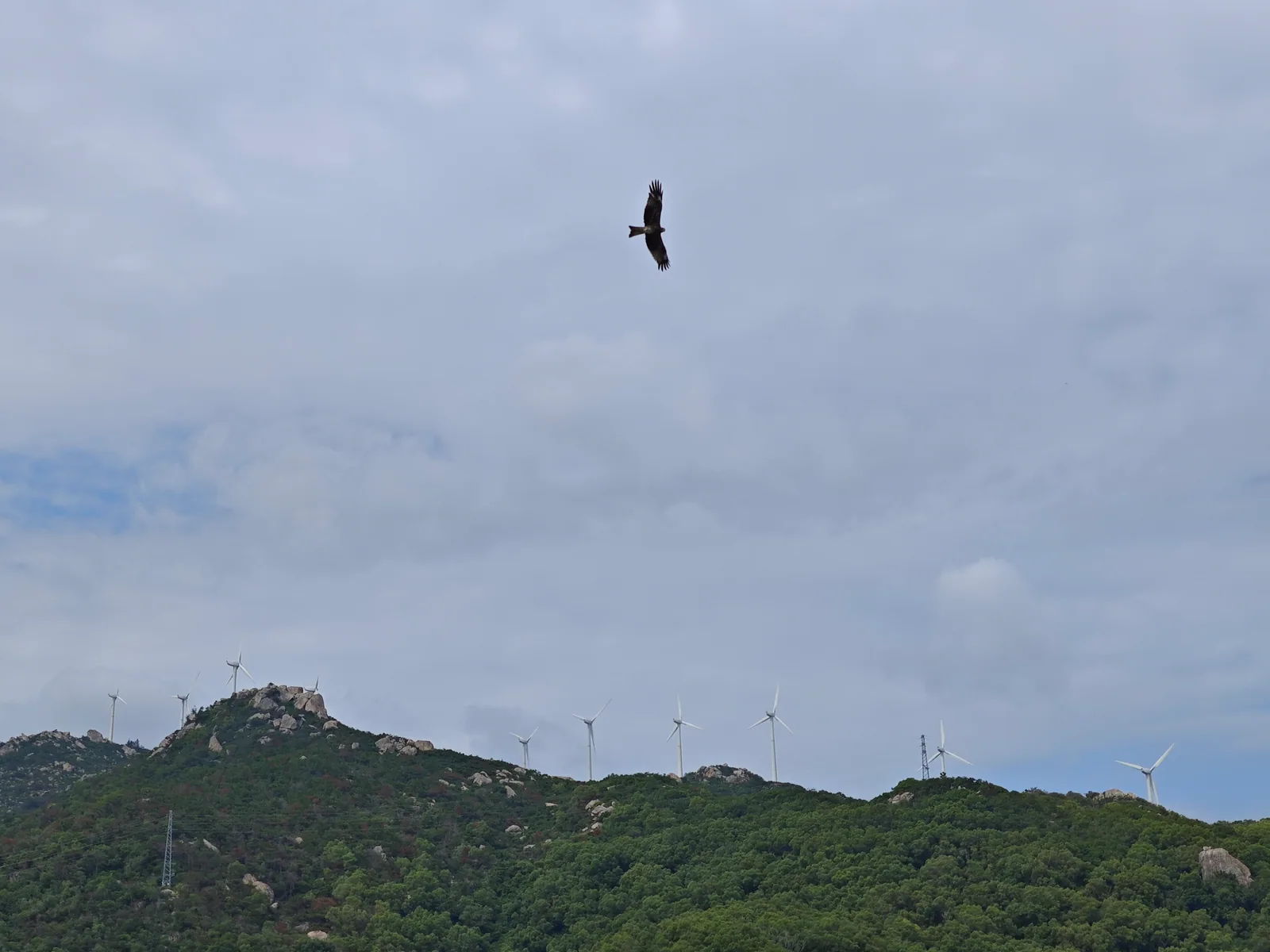
Over the ridge, a bird is crossing the open sky. White turbines stand below among the green slopes and exposed rock; higher up, the bird has spread its wings wide, the outer feathers distinct against the cloud. I cannot name it. I only follow it with my eyes, until my neck begins to tire and I am still reluctant to look down. There was so much to look at along the coast, yet for those few moments one dark shape held the whole sky.抬头时,一只鸟正从山脊上方经过。白色风机立在绿坡与裸石之间,更高处,它把双翅平平展开,翼尖的羽毛一根根分明。我认不出它的名字,只知道仰着头追随,脖颈有些酸了,还舍不得把目光收回来。一路看过那么多东西,这一刻,偌大的天空,只剩下它值得看。
Chaozhou: flavours that linger潮州:碟中有余味
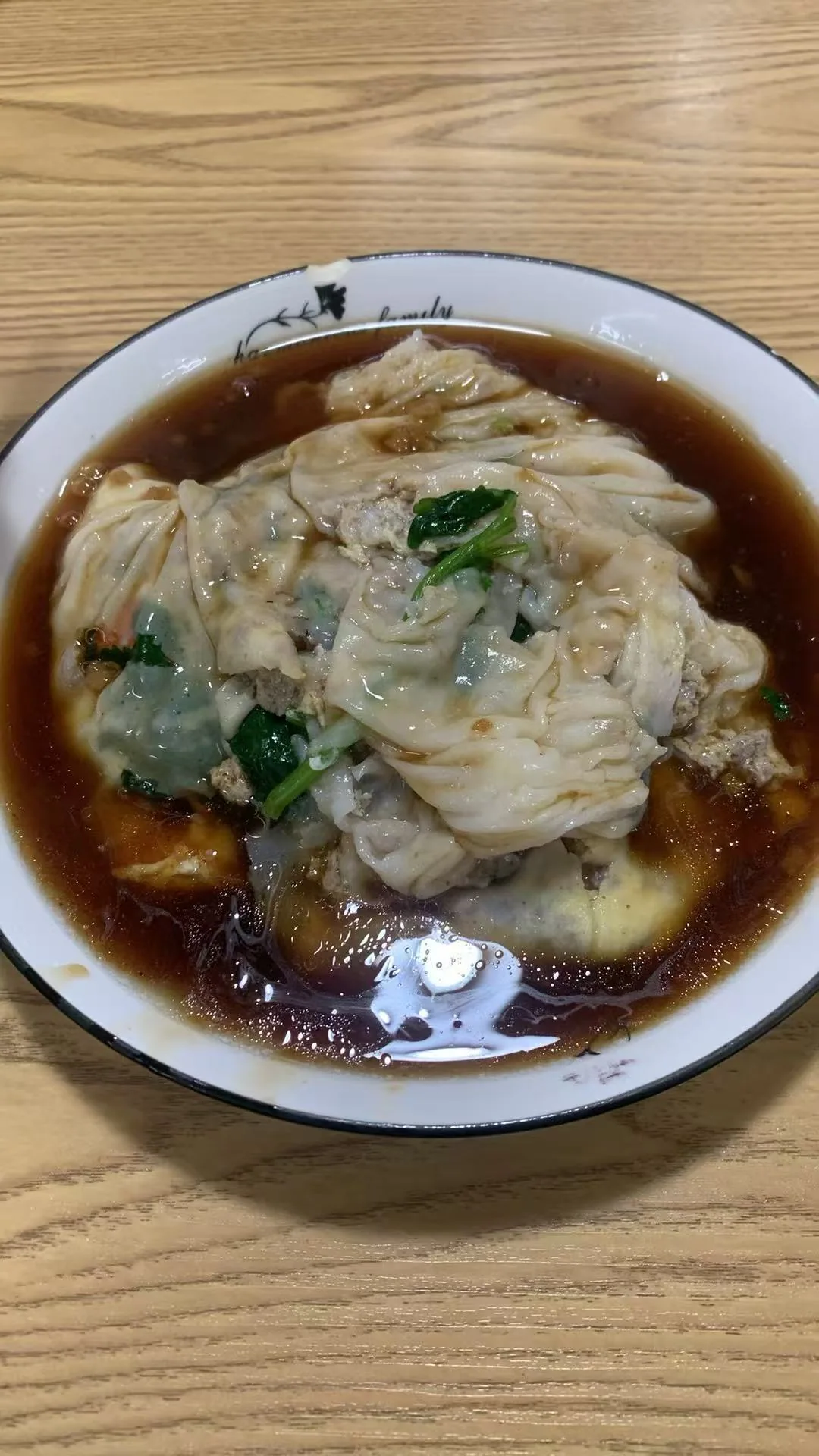
After walking around Chaozhou, I begin to think about sitting down to eat. A plate of rice noodle rolls arrives, white folds gathered in a dark pool of sauce, a little green showing through their translucent edges. The sheets yield at the touch of the chopsticks. First comes their smoothness, then the savoury sauce, with the mild fragrance of rice lingering underneath. The whole thing is easy to eat and unexpectedly hard to hurry. I lift another fold, catching the filling and a little sauce, and let the next part of the journey wait.在潮州走累了,便惦记找个地方坐下来吃饭。一碟肠粉端到面前,白白的粉皮叠着软褶,浸在深色酱汁里,薄处透出一点青绿。筷子刚碰上去,粉皮就顺势软下来。入口先是滑,继而是酱汁的咸鲜,淡淡米香留在后头。这东西吃着容易,却让人舍不得囫囵吞下。再挑起一折,兜住馅料和一点汁水,至于下一站,容我把这一口吃完。
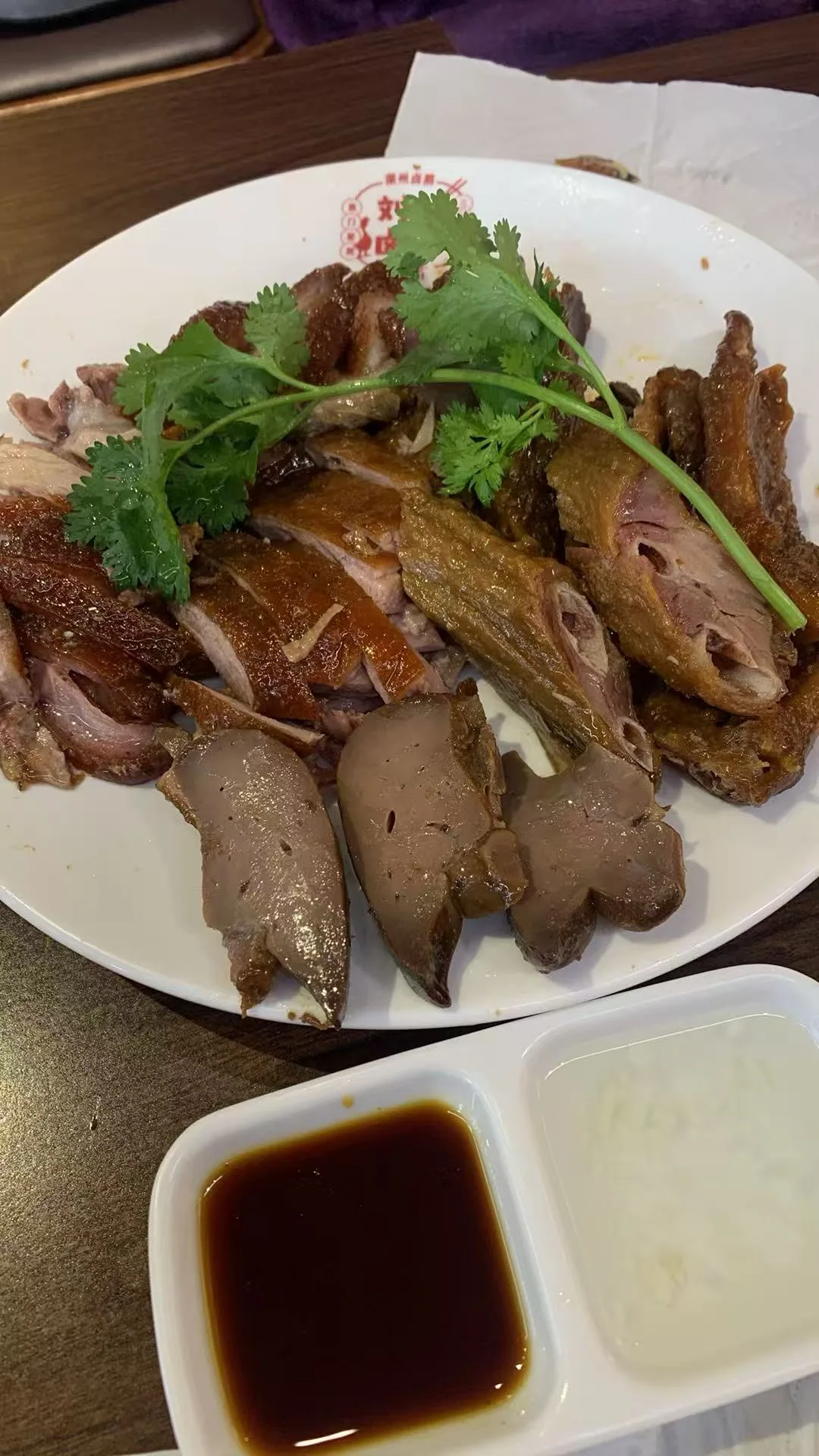
The braised platter asks for a different pace. The skin has a deep, polished colour; coriander lies across the meat, its green vivid against the brown. A slice has a little resistance before giving way, and the braising liquor has worked its fragrance inward. A light dip in the sauce is enough. I like the unceremonious abundance of the plate: pieces close together, sliced offal set along the rim, no precious gaps between them. With one bite still lingering, the chopsticks are already reaching for another.卤味是另一路滋味。皮面酱色深亮,几枝香菜搭在上头,新绿衬着浓褐,看着就叫人有食欲。夹一片,皮略有韧意,肉里蓄着卤香,蘸料轻轻一沾,滋味又添了一层。喜欢这盘东西盛得实在,切好的肉彼此挨着,几片卤好的内脏码在盘边,不作多余的修饰。上一口的余味还在,筷子已经想去夹下一片。
Towards the end of the meal, I eat more slowly. The walking has settled into a pleasant tiredness, and the food gives me every excuse to sit a little longer. I may forget which turning led to which street. I am less likely to forget the rice noodle slipping from the chopsticks, or the taste that stayed after the braised meat. Some places are remembered this way: long after the road names have blurred, a familiar flavour brings a whole afternoon back.吃到后来,筷子慢了,走路积下的疲惫也有了安放处,索性再多坐一会儿。哪条街从哪个路口转进去,过些日子未必还记得清;粉皮从筷尖滑落的样子,卤香留在嘴里的那一会儿,却不容易忘。一个地方的余味,有时就在这里。路名渐渐模糊了,舌尖还替人记着。
Chaozhou: letters home and the river潮州:家书与江水
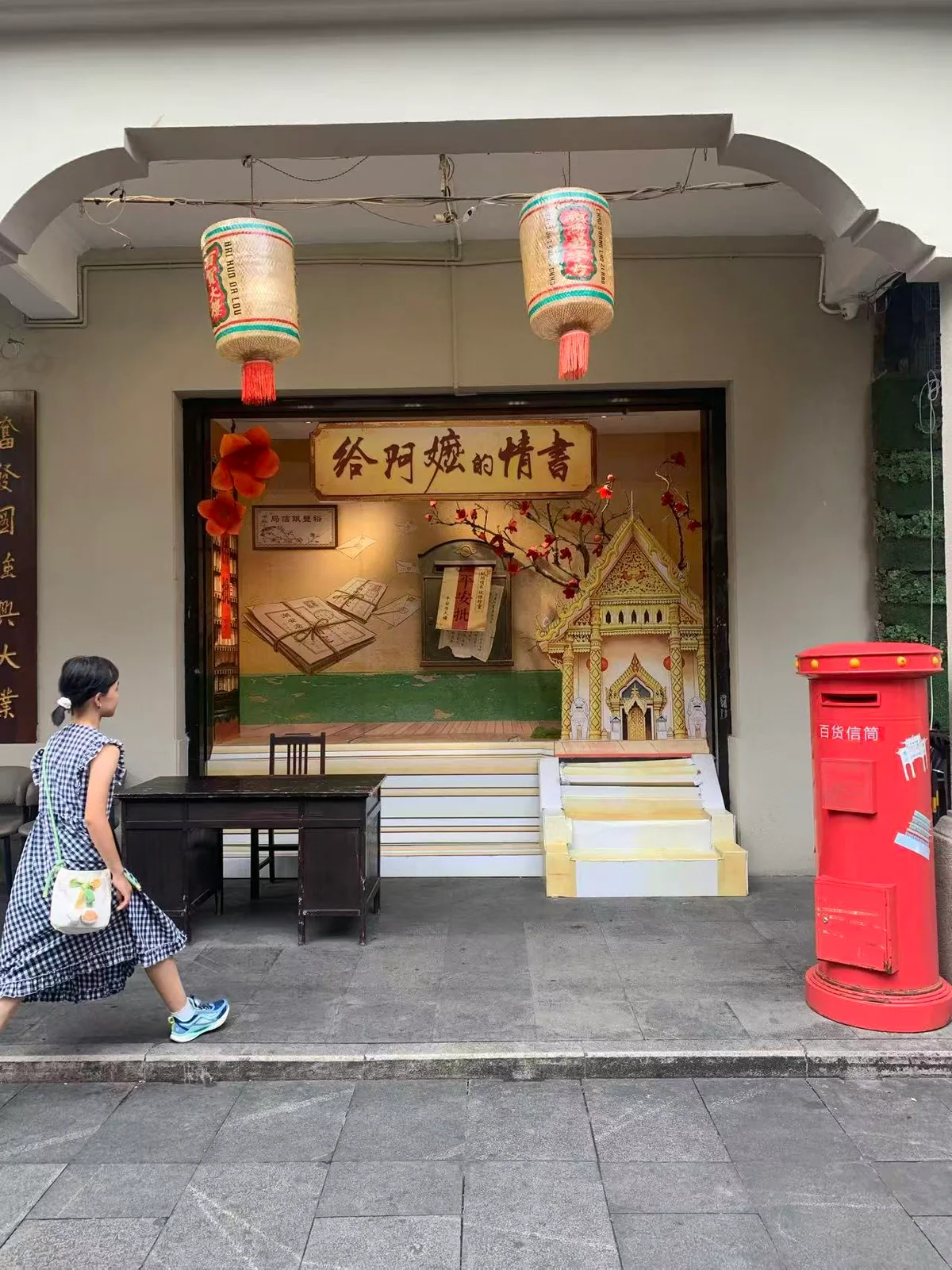
On Paifang Street in Chaozhou, a window gives me another reason to stop: “A Love Letter to Grandma”. Two lanterns hang above it, a red postbox stands beside it, and letters rest behind the glass. The word “Grandma” makes the distance in that little display suddenly intimate. In Chaoshan’s qiaopi tradition, money was sent home together with family letters; earnings and news made the same long journey. I think of the hands that sealed those envelopes, and the other hands waiting to open them. Until this window, I had been looking at shopfronts. Now I remember that these streets have also seen people off, and waited for them to come home.在潮州牌坊街,走到“给阿嫲的情书”前,脚步又停了。两盏灯笼,一只红邮筒,玻璃后面几封信。“阿嫲”是个亲近的称呼,放在这里,远方忽然就有了牵挂。潮汕的侨批,将汇款与家书一同寄回,谋生的辛苦与报平安的话,都装进薄薄的信封。我想起封信的那双手,也想起等着拆信的另一双手。来时只顾看铺面,到这里,才想到这些街道也曾送人出门,等人回家。
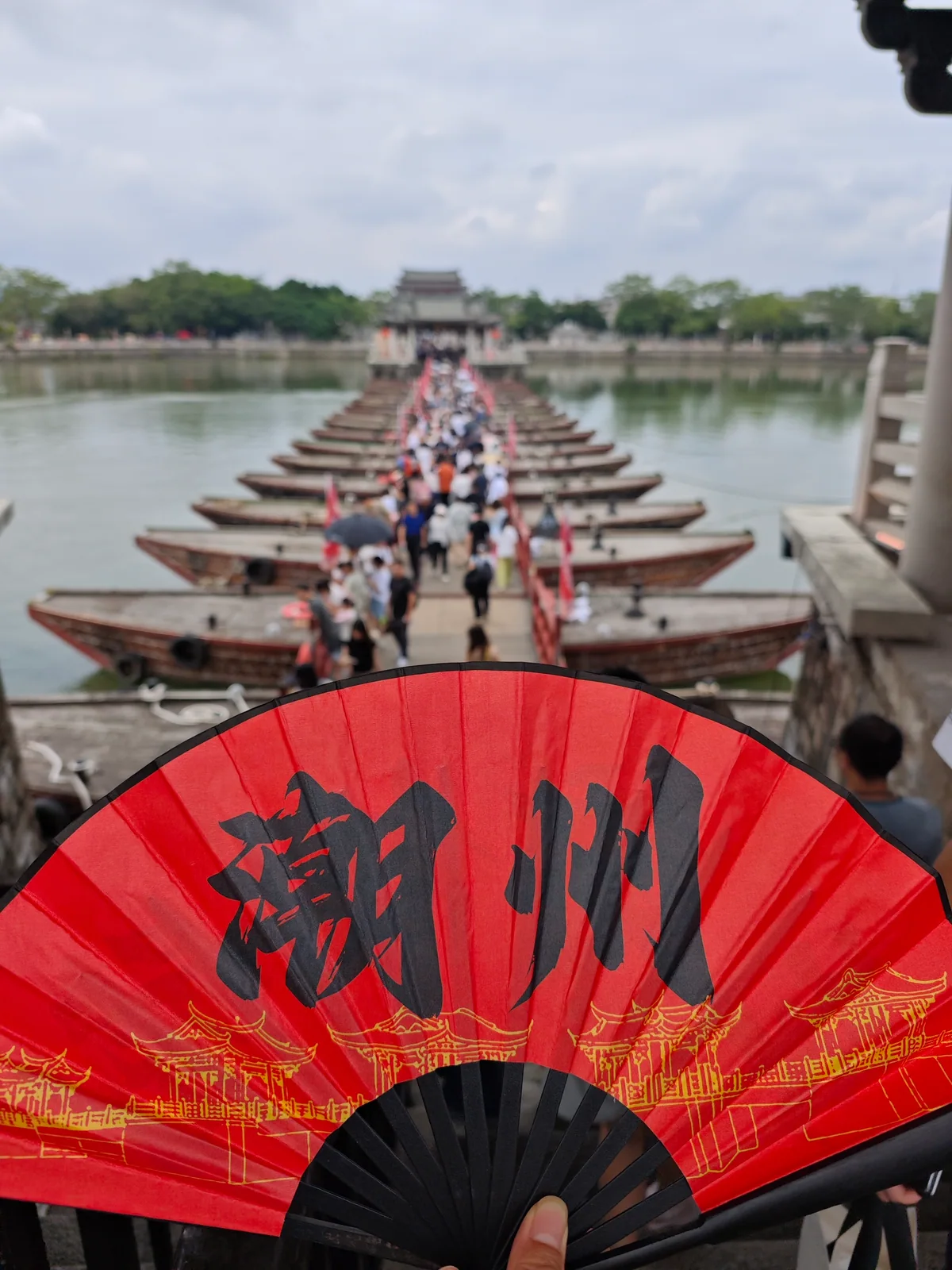
By the Han River, the crowd on Guangji Bridge slows everyone’s steps. People move towards the pavilions, and on either side of the walkway the pointed ends of wooden boats extend into the river. Eighteen boats join the bridge’s central floating section. From a distance they form a pattern; close by, each has its own grain of wood, its own marks along the hull. Water shows in the gaps. I lower my eyes to it, letting the line of people carry me forward a little at a time.走到韩江边,广济桥上的人流把脚步放慢了。前面是亭阁,左右是江水,一只只木船横在桥道下,尖尖的船头伸向两边。十八只梭船连起中段浮桥,远看齐整,近处却各有各的木纹,各有各的水痕。船与船之间,江水露出来。我低头看一眼,再随人群向前挪几步。
The river goes on beneath the boats, indifferent to our progress. I try to imagine all the feet that have crossed here before mine, then return to the ordinary footsteps just ahead. Old places have this effect on me: for a moment the years seem immense, and then someone moves, a space opens, and it is my turn to walk on. I open the red fan. “Chaozhou” spreads across it in dark strokes, and the pavilions and passing faces are left above its curved edge. The river breeze reaches my hand.水从船底流过去,不管桥上的人走得快慢。站在这里,难免想一想,在自己之前,曾有多少双脚踏过这段路;念头还没走远,前面的人动了,空出一个身位,又轮到自己往前。古老的地方常让人这样,一时想到很远的年岁,一时又回到眼前寻常的脚步。我把红折扇展开,“潮州”两个墨字铺在扇面上,亭阁与人影留在弧形的扇沿之外,江风吹到手边。
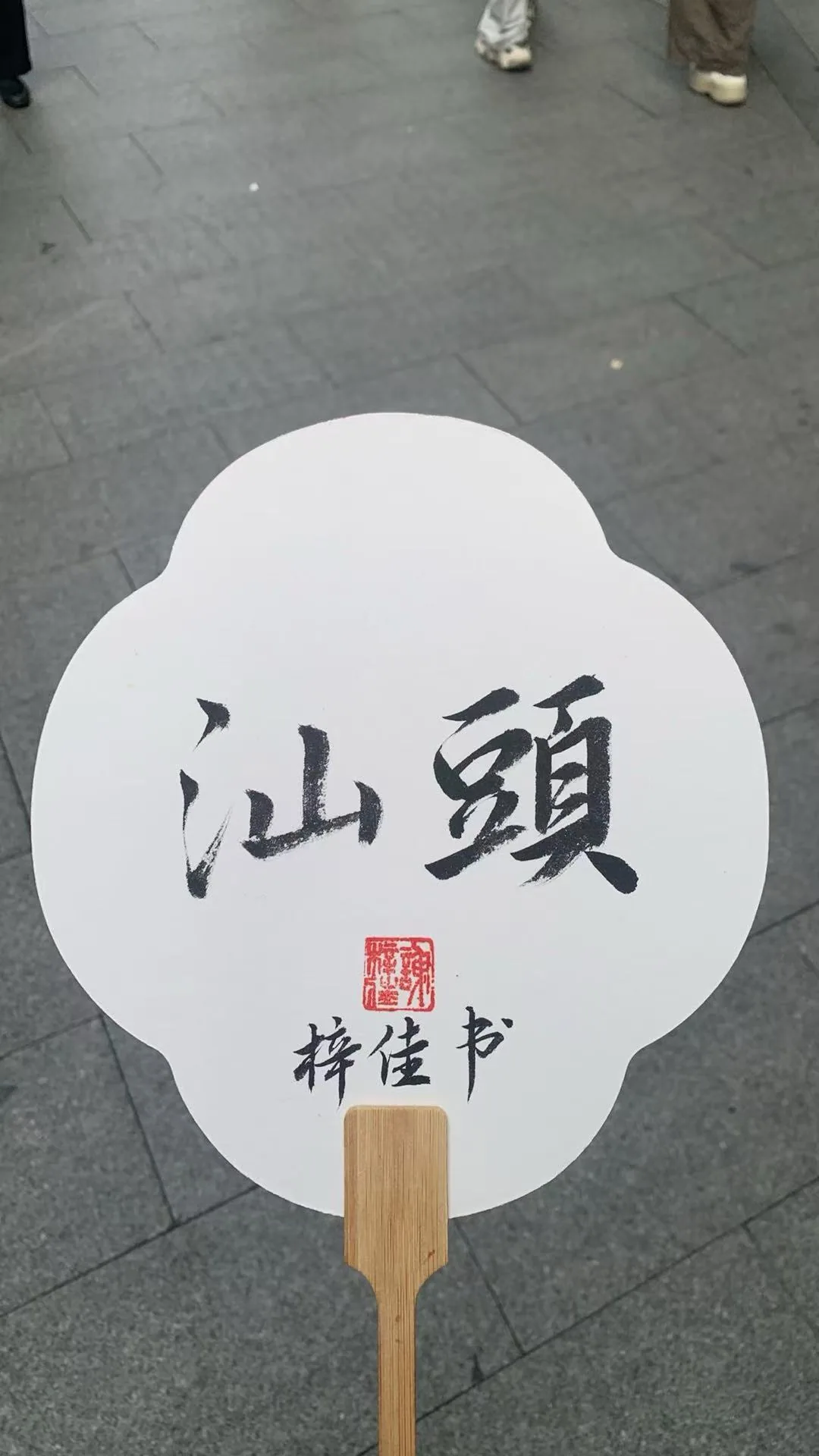
Before leaving, I fold the red fan and put it in my bag beside the white one. There has scarcely been time to dwell on the sea I have seen and the streets I have walked, and already it is time to go home. I will keep them. On some close, hot afternoon, I can take one out again and fan myself slowly.临走,把红折扇合拢,和白扇一同收进包里。一路上看过的海、走过的街,还没来得及细想,已经到了该回去的时候。留着吧,等某个闷热的午后,再取一把出来,慢慢扇。